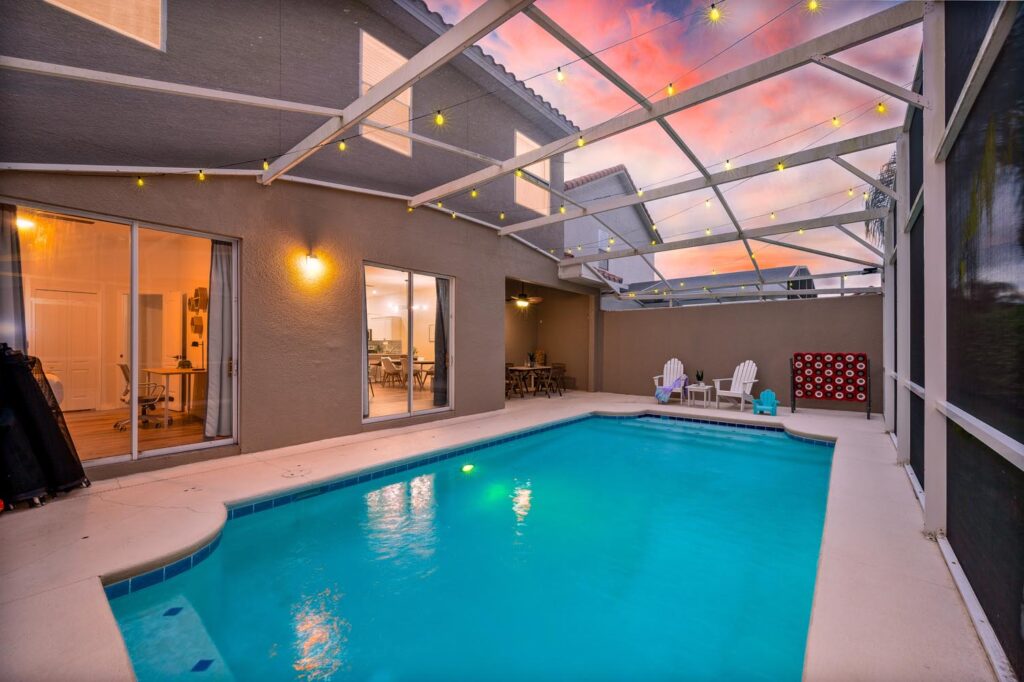
If you own a home in Tampa and are looking for Airbnb property management in Tampa, FL — or want to start renting it yourself — this guide covers everything you need to know.
Tampa is one of Florida’s most operator-friendly short-term rental markets. The city has a relatively light-touch regulatory environment compared to coastal neighbors like Clearwater, and Hillsborough County’s framework is navigable for owners who understand it. But “operator-friendly” doesn’t mean unregulated — licensing, zoning, and tax compliance are real requirements, and getting them wrong is expensive.
This guide covers Tampa’s STR regulations, licensing steps, tax obligations, earning potential, the best neighborhoods for vacation rentals, and what full-service property management actually looks like in this market.
Is Airbnb Legal in Tampa, FL?
Yes — short-term rentals are legal in Tampa, but with important zoning conditions.
Hillsborough County defines a short-term rental as any accommodation rented for seven nights or less. Under county rules, STRs are permitted only in designated residential and commercial zones — not in all residential areas. Before listing your Tampa property on Airbnb, the single most important first step is verifying your zoning with the Hillsborough County Land Development Office. Operating a short-term rental in a non-approved zone can result in fines and forced closure of your listing.
Beyond zoning, Tampa is governed by Florida state STR law — Florida Statutes Chapter 509 — which classifies vacation rentals as transient public lodging establishments and requires a state-level license from the Florida Department of Business and Professional Regulation (DBPR). This framework applies regardless of whether you’re in Tampa, Clearwater, or anywhere else in Florida.
One important note: Tampa currently does not require a separate city-level STR permit beyond the state DBPR license and Hillsborough County Business Tax Receipt. This makes Tampa meaningfully less bureaucratic than cities like Miami Beach or Orlando, where additional local permits are required.
How to Legally Operate an Airbnb in Tampa: Step-by-Step
Here’s the complete licensing and compliance process for Tampa vacation rental owners:
Step 1: Verify Zoning
Contact the Hillsborough County Land Development Office to confirm your property’s zoning classification permits short-term rental activity. The office can be reached at 601 E Kennedy Blvd, 16th Floor, Tampa, or by phone at (813) 272-5940. This step must come before any application — investing in setup costs for a property in a non-compliant zone is a costly mistake.
Step 2: Obtain Your Florida DBPR Vacation Rental License
Every Tampa property rented more than three times per year for stays under 30 days requires a vacation rental license from the Florida Department of Business and Professional Regulation. There are two license categories: a Vacation Rental Dwelling license (for single-family homes and small multi-family properties) and a Vacation Rental Condo license (for condominiums). Applications are completed online through the DBPR website. License fees range from $90 for a half-year to $170 for a full year, plus a non-refundable $50 application fee. Your DBPR license number must be displayed on your Airbnb listing.
Step 3: Obtain a Hillsborough County Business Tax Receipt
In addition to the state DBPR license, Tampa owners must obtain a Business Tax Receipt (BTR) from Hillsborough County. The BTR application fee is approximately $45 and must be renewed annually. This can be filed through the Hillsborough County Tax Collector’s website.
Step 4: Register for Tourist Development Tax
All Tampa STR owners must register with the Hillsborough County Tax Collector for Tourist Development Tax purposes — even if you plan to list exclusively on Airbnb. More on taxes in the section below.
Step 5: Safety Compliance
Tampa STRs must comply with Florida Building Code, Fire Code, and Life Safety Code requirements. This includes working smoke detectors, carbon monoxide detectors, fire extinguishers, and adequate emergency egress. Multi-story properties require balcony inspection certification as part of the DBPR licensing process.
Step 6: Maximum Occupancy Limits
Tampa’s maximum overnight occupancy for short-term rentals is six persons, or two persons per bedroom, whichever is greater. Additional persons may be permitted in common areas under specific conditions. This limit applies to your entire listing and must be reflected in your house rules.
Taxes for Tampa Airbnb Owners: What You Actually Owe
Tax compliance is where many self-managing Tampa owners run into trouble — not because the rules are unclear, but because there’s a critical distinction between what Airbnb handles automatically and what remains the owner’s responsibility.
Tampa STR owners in Hillsborough County face three primary tax obligations:
1. Florida State Sales Tax (6%)
Applied to all short-term rental income for stays of six months or less. Airbnb and VRBO collect and remit state sales tax on behalf of hosts in Florida for bookings made through their platforms.
2. Hillsborough County Tourist Development Tax (6%)
The Hillsborough County TDT is 6% of the total rental amount, including cleaning fees and any other mandatory charges. Unlike Osceola County — where Airbnb has no collection agreement and owners must remit the TDT themselves — Hillsborough County does have an agreement with Airbnb and VRBO. These platforms collect and remit the TDT on behalf of hosts for bookings made directly through their sites. However, if you use a third-party reservation system, receive direct bookings, or use any other platform not covered by the county’s agreement, you are responsible for collecting and remitting the TDT yourself.
3. County Discretionary Sales Surtax
Hillsborough County levies an additional discretionary surtax on short-term rental income. As of 2025, the combined total tax burden for Tampa STR owners is approximately 11–12% of gross rental revenue, combining state sales tax, county TDT, and the discretionary surtax. Note: Hillsborough County temporarily suspended certain discretionary surtaxes as of January 1, 2025 — confirm current rates with the Hillsborough County Tax Collector before filing.
Even if Airbnb is handling collection and remittance of the TDT for your bookings, you are still required to register with the Hillsborough County Tax Collector’s Office. Registration is mandatory, and failure to register — even if you have no tax due directly — can result in compliance issues during audits.
A professional property management company registers your property, tracks all tax obligations across platforms, and handles monthly filing — eliminating one of the most administratively complex aspects of self-managing.
Tampa’s Airbnb Market: What Are Owners Actually Earning?
Tampa is a different type of short-term rental market than Kissimmee or Davenport. Where the Disney-area markets are dominated by large vacation homes rented by families on theme park trips, Tampa draws a more diverse guest mix: business travelers, sports fans attending Buccaneers or Rays games, medical travelers visiting Tampa General or Moffitt Cancer Center, convention attendees, and leisure guests exploring the waterfront, Ybor City, and the Gulf Coast.
That guest diversity is one of Tampa’s strengths — demand is spread more evenly across the calendar rather than concentrated entirely in holiday windows.
Based on current market data:
- Average annual revenue per Tampa Airbnb listing: approximately $28,000–$37,000
- Average daily rate (ADR): $188–$201
- Average occupancy rate: 47–68% (variance reflects different listing samples and measurement periods)
- Peak months: March and February — driven by spring break, Gasparilla Festival, and winter leisure travel
- Slowest month: July — summer heat reduces leisure demand compared to spring and fall
- Market growth: 29.5% revenue growth year-over-year per AirROI’s 2026 dataset
Top-performing properties significantly outperform these averages. The top 25% of Tampa listings achieve 75%+ occupancy, and the top 10% reach 87%+ — typically through superior location, professional management, dynamic pricing, and well-maintained, well-photographed properties.
Hyde Park properties, for example, command average daily rates around $279 given proximity to Bayshore Boulevard, the waterfront, and South Tampa’s dining and entertainment district. Ybor City listings average approximately $185/night but benefit from high occupancy driven by the area’s nightlife and cultural appeal. Seminole Heights attracts a younger, experience-focused traveler and consistently performs well for 1–2 bedroom properties.
Best Tampa Neighborhoods for Short-Term Rentals
Tampa’s vacation rental landscape is meaningfully neighborhood-dependent — both from a performance perspective and a zoning perspective. Here are the areas that consistently generate the strongest results for STR owners.
Hyde Park / South Tampa
Historic Hyde Park is one of Tampa’s premium STR neighborhoods. Properties here sit near Bayshore Boulevard — one of the longest continuous sidewalks in the country — Hyde Park Village’s dining and retail, and the SoHo nightlife corridor. Average daily rates in the 33606 zip code reach approximately $279, and properties consistently attract business travelers, couples, and leisure visitors who want a walkable, upscale neighborhood experience. The trade-off: median home values in Hyde Park exceed $650,000, making acquisition costs the highest in the city.
Ybor City
Ybor City offers an accessible entry point for STR investors — median property prices around $387,000 — with strong demand driven by the neighborhood’s Cuban heritage, craft beer culture, nightlife, and growing reputation as Tampa’s most distinctive cultural enclave. Two-bedroom properties perform best here. Ybor City attracts a mix of younger leisure travelers, weekend visitors, and groups exploring Tampa’s food and entertainment scene. ADRs average around $185/night.
Seminole Heights
An up-and-coming neighborhood north of downtown, Seminole Heights has built strong demand among travelers seeking an authentic local experience over a generic tourist stay. Indie restaurants, craft breweries, historic bungalows, and an accessible price point ($350,000 median home value) make it attractive for owners and guests alike. 1–2 bedroom properties perform best in this market segment.
Downtown / Channelside
Properties near downtown Tampa, the Riverwalk, Amalie Arena, and Channelside benefit from year-round demand driven by concerts, sporting events, conventions at the Tampa Convention Center, and cruise port traffic. Condos and apartments work well in this zone. Demand is more event-driven than neighborhood-lifestyle-driven, which means it responds strongly to dynamic pricing around Buccaneers games, concerts, and the Gasparilla Festival.
Davis Islands
A small, walkable island community just south of downtown, Davis Islands attracts guests seeking a quieter, residential Tampa experience with easy access to the city’s waterfront and medical district. Occupancy is steady, and the neighborhood’s charm commands premium ADRs relative to property acquisition costs.
Tampa vs. Other Blue Gems Markets: How Does It Compare?
Tampa is a fundamentally different investment profile from the Disney-area markets. Kissimmee and Davenport are driven almost entirely by theme park demand — predictable, seasonal, and group-focused. Tampa is driven by a diversified demand base: tourism, sports, business travel, and medical visits create more consistent year-round occupancy with less dramatic seasonal swings.
Average nightly rates in Tampa ($188–$201) are lower than Kissimmee’s top tier, and Tampa properties tend to be smaller (1–3 bedrooms) compared to the 4–8 bedroom pool homes that dominate the Kissimmee market. But Tampa’s lower acquisition costs and more diversified demand base make it an attractive market for owners seeking year-round cash flow without the heavy seasonality of a theme park market.
If you’re evaluating Florida markets for an investment purchase, our comparison of Kissimmee vs. Davenport for Airbnb investment provides a side-by-side analysis of the Disney-area options. For homeowners who already own in Tampa and are considering renting, the question is simpler: Tampa’s market is active and growing, and professional management makes the economics work.
What Full-Service Airbnb Property Management Covers in Tampa
Many Tampa homeowners start by self-managing their Airbnb, particularly if they live locally. It works — until the 2am maintenance call, the guest dispute, the pricing miscalculation during Gasparilla weekend, or the tax filing deadline they didn’t know existed. Here’s what a full-service property manager handles:
Licensing and compliance: DBPR application, Hillsborough County BTR, tourist development tax registration, ongoing compliance monitoring. This alone saves hours of research and administrative work upfront.
Listing creation and optimization: Professional photography, platform-optimized titles and descriptions, listing setup on Airbnb, VRBO, and direct booking channels. A professional listing consistently outperforms a self-created one in search ranking and conversion rate.
Dynamic pricing: Rates adjusted daily based on competitor availability, local events, booking lead times, and seasonal demand. During Gasparilla Festival, a Buccaneers playoff run, or a major convention at the Convention Center, dynamic pricing can double your nightly rate relative to a static price — and those windows are exactly when the revenue gap between managed and self-managed properties is largest.
Guest communication and screening: All inquiries, booking confirmations, check-in instructions, and guest support handled 24/7. Guest screening reduces the risk of problematic bookings.
Housekeeping and turnovers: Professional cleaning, restocking, and inspection after every stay. Consistent cleanliness is the single biggest driver of 5-star reviews, which drives Airbnb and VRBO search ranking.
Maintenance coordination: Routine and emergency maintenance handled without owner involvement. Proactive maintenance prevents the kind of deferred issues that generate negative reviews and expensive repair bills.
Tax collection and remittance: All TDT and state sales tax tracked, collected, and filed on schedule. No compliance risk, no missed deadlines.
Reporting: Monthly owner statements showing revenue, expenses, occupancy, and performance benchmarks. Full visibility without the management burden.
Blue Gems manages vacation rentals across Tampa, Lutz, and throughout the broader Florida Gulf Coast. To see what your Tampa property could earn with full-service management, request a free income estimate →
Tampa and Lutz: What Owners in Both Markets Need to Know
Blue Gems also manages properties in Lutz, the suburban community north of Tampa in Hillsborough County. Lutz STR owners follow the same Hillsborough County regulatory framework as Tampa — DBPR license, BTR, zoning verification, and the same TDT structure. Lutz properties tend to attract longer-stay guests, families visiting the Tampa Bay area, and travelers who prefer suburban comfort over urban density. It’s a less competitive market than downtown Tampa with steady demand from the broader metro area.
Why Tampa Is One of Florida’s Best-Positioned STR Markets Right Now
A few things are working in Tampa’s favor heading into 2026 and beyond:
Population and tourism growth: Tampa’s population continues to grow rapidly. The city welcomed over 24 million visitors in recent years, a number that is projected to continue rising as Tampa’s profile as a sports, convention, and entertainment destination strengthens.
Light regulation relative to competitors: Multiple guides ranking Florida’s most STR-friendly cities consistently place Tampa among the top tier — fewer restrictions than Miami Beach, Clearwater, or St. Pete Beach, and no city-level permit beyond the state DBPR license.
Revenue growth: AirROI’s 2026 data shows Tampa’s STR market growing at approximately 29.5% year-over-year in revenue — among the strongest growth rates of any Florida market currently tracked.
Diversified demand base: Unlike single-driver markets that live and die by one attraction, Tampa’s mix of sports, business travel, cultural tourism, and Gulf Coast proximity creates resilience against any one demand source weakening.
Getting Started: What to Do First
If you own a Tampa or Lutz property and want to evaluate it as a vacation rental, here’s the practical first step sequence:
- Verify your zoning with the Hillsborough County Land Development Office
- Get a free income estimate based on comparable properties in your specific neighborhood
- Decide between self-managing and professional management — the compliance overhead alone is a significant consideration for first-time hosts
- If self-managing: apply for DBPR license first, then BTR, then TDT registration
- If working with a management company: onboarding typically covers all licensing and setup
Blue Gems manages properties across Tampa, Lutz, and the broader Florida Gulf Coast market. Our team handles everything from licensing setup to daily operations — so you earn passive income while we run the property. To find out what your Tampa home could earn, get your free income estimate →
Or if you’re also evaluating our coastal management services, explore how we work across Clearwater and St. Pete Beach — two Gulf Coast markets that complement a Tampa portfolio.
The Bottom Line
Tampa is a well-positioned, growing, and relatively accessible short-term rental market. The regulatory framework is manageable, the demand base is diversified, and the revenue growth trajectory is among the strongest in Florida. Owners who approach it with the right licensing, the right pricing strategy, and professional management are consistently extracting strong returns from their properties.
The complexity isn’t in the market — it’s in the execution. Zoning verification, licensing, tax compliance, dynamic pricing, and guest experience all have to work together. That’s exactly what a professional management company exists to handle.